Posted on Leave a comment

What’s in a package of techelet tzitzit strings?

Today I got an inquiry from someone by the name of Steve who was ready to tackle techelet tzitzit tying for his first time. But when he started asking questions I could tell he was very unclear about what’s inside a set of techelet strings.

i am still unsure about the shamash(s?)
to do the white and blue windings wouldn’t there need to be a blue and a white shamash?

I explained to Steve that every set of techelet tzitzit has four white shamash strings. With Chabad tying you don’t really need it because there are just two windings of white in total, so even if you used a regular length string it would be long enough.

When possible you’re supposed to use the same shamash string, so using the long one helps because when you finish all the windings you know which one you used at the start. If not, i.e. if you use a regular length string as the white shamash, you would make a little knot at the end so help you identify it later.

But Steve still sounded bewildered:

and are there sets sold with both blue and white shamashes specified?
i have understood correctly both a blue and a white shamash are needed, right?

There are basically two types of sets of techelet sets: “Raavad” and “Rambam.”

Raavad means you wind up with two blue and six white strings hanging down from each corner. In reality, it’s one blue string and three white strings, but when tied it looks like eight.

Rambam means you wind up with one blue and seven white strings hanging down from each corner. How can that be? One of the strings is dyed half blue.

In general Raavad is more common, but among those tying Chabad, Rambam is more common.

Just as a clear example, let’s say you buy a Raavad set, open up the package, and lay the strings flat on a table. If you divide the 16 strings in the package into four piles, one for each corner, here’s what you’ll have in each corner:

  • two regular length white strings
  • one longer white string
  • one longer blue string

So there’s nothing to designate. The two long strings are the shamash strings.
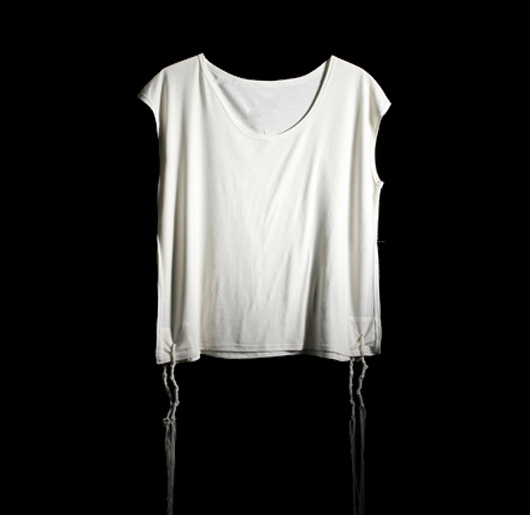
Posted on Leave a comment

Lightweight Wool Tallit Katan

In the space of a single day we received two inquiries about how to compare the lightweight wool tallit katan options listed on our . So it’s time for some detailed clarification!

Lightweight Wool Tallit Katan – Made by Talitania/Keter Malchut, this tallit katan was not intentionally designed as a lightweight tallit katan, but as a regular tallit katan. However, we compared some on a scale and found that it’s noticeably lighter than the Classic Wool Tallit Katan, made by Mishkan Hatchelet.

If you were to put it alongside our Classic Wool Tallit Katan and examine the fabric carefully, you might determine that the Classic has a more attractive weave, but the difference is not very significant. After a short time of wear any such distinction between the two may no longer be noticeable.

Arguably, it might be considered zeh E-li v’einvehu, i.e. a beautification of the mitzvah to select the nicer weave, but on the other hand perhaps that does not extend to such a minor difference, and the quality of the Lightweight Wool Tallit Katan also fulfills zeh E-li v’einvehu.

Kalit – Made by Mishkan Hatchelet, this tallit katan is specifically designed and marketed by Mishkan Hatchelet as a lightweight tallit katan, so it has a tight weave and a bit less wool overall than the Classic.

Another point to keep in mind is that if you want special options, such as round neck opening, double tzitzit holes or no fringes, those options (with some exceptions) are only available on the Lightweight Wool Tallit Katan.

Wool Comfort – Made by Mishkan Hatchelet, this has been a popular item for several years. Although it is made of a soft, comfortable wool and has the same design as Mishkan Hatchelet’s popular cotton undershirt tzitzit, it’s not meant to be worn directly on the skin. It features a unique side band that holds the two sides together beneath the arms and helps prevent it from riding up. The fabric is very light and airy.

Tzitzit Noam – Made by a small company in northern Israel, this is similar to the Wool Comfort, but feels even lighter. The neck opening is round, but will not normally be visible popping up in the front shirt opening.

Wool Undershirt with Snaps – Made by Aleph Judaica, located outside Jerusalem, this wool undershirt tzitzit garment is almost identical to the Wool Comfort (above), but instead of the side band or stitches, it has snaps along the sides. We do not currently offer this product, but have been debating for months whether to introduce it, and welcome readers’ input!

All of the above options are available with a large range of tzitzit options.

Go to Wool Tallit Katan category>>>

Posted on Leave a comment

Who ties the tzitzis?

This week we got an inquiry from someone who was essentially asking if our tzitzis are kosher! A bit blunt, but I suppose it’s a legitimate question.

Who ties the tzitzis? I hope you don’t mind me asking. Are they made lishmah/is there a hechsher on the tziztis tying? Do the beged, strings and tying all have to be lishma? All the best, Ari
P.S. The site is very informative.

I explained to Ari that when you see a hechsher on a tallis gadol or tallis katan, you have to read the small print. Usually it just means the tzitzis strings have a hechsher. Just about all tallis katan products have a hechsher that covers the strings, but not the tying or the beged.

The tallit katan garment definitely does not have to be lishmah. Anyone can make the beged — a woman, a child, a goy, etc. Obviously it can’t have shaatnez, but shaatnez is not an issue with a tallis katan, and only very rarely with a tallis gadol. The key to kashrus of a tallis katan beged is that the holes are properly positioned (they should be 5 cm from the edges; if they are 7 cm or 3 cm from the edges, you have a problem on your hands) and that the dimensions of the beged are sufficient. The latter is a very complex issue (see here and here).

The strings definitely do have to be lishmah. The big question is from which stage. Most people who adhere to halacha carefully choose hand-spun (not niputz lishmah, which is according to strict opinions, and not machine-spun, which is according to lenient opinions). To understand the issue, see here and here.

The tying also has to be lishmah, but that’s pretty easy. You have to say, “leshem mitzvah tzitzis” when you get started (and again if you get distracted at any point). Who’s qualified? I’ve never gotten a reliable answer to that question. In Israel, manufacturers who need to have 10,000 or 20,000 or 50,000 tzitzis tied (i.e. machine spun on undershirt tzitzis, etc.) sometimes even take them to prisoners (which is not necessarily posul)!

One moreh hora’ah told me the geder is if it’s someone who wears tzitzis, he’s qualified to tie tzitzis. I don’t think that’s an authoritative opinion, but in practice, I think that’s fairly common.

Our tzitzit tie-er is a kollel man with over ten years’ professional experience tying. He comes from a very erlicht, respected family in Bnei Brak.

Posted on Leave a comment

What are tzitzit strings made of?

I’m not sure exactly why, but fairly often we get inquiries from prospective customers asking what our tzitzit strings are made of. Here’s one such inquiry we received today:

     What are the Tzitzit made of? Wool, cotton etc? Thanks, Saul M.

About 99% of kosher tzitzit made today are made of wool. According to halacha, you can tie wool tzitzit on any type of tallit or tzitzit garment — wool, cotton, silk, synthetic — with the exception of linen.

Some people mistakenly think that you need cotton tzitzit for a cotton tallit. Another common misconception is that wool and cotton are a forbidden mixture. They’re not. Shaatnez is a mixture of wool and linen (which is not the same as cotton).

We got this same question about a week ago from a lady named Fran. When I wrote the above explanation to her, her reply threw me for a loop:

     But the tallit I am making is linen…

We really don’t have a solution for Fran. I referred her to a lady in Los Angeles (actually I think she may have moved to Oregon) who used to involved with linen tzitzit, although I don’t know enough about her or her tzitzit to vouch for their kashrus.

And what are the “cotton tzitzit” you see all over the internet?

The proper name for a tzitzit garment worn all day is tallit katan (“small tallit”) or arba kanfot (“four corners”), but sometimes people simply refer to it as “tzitzit.” They don’t mean the tzitzit strings, but a tallit katan with tzitzit attached. So if that garment is made of cotton (with wool tzitzit), it will be referred to as “cotton tzitzit.”

Posted on Leave a comment

Tallit Striping

I’ve sold a whole lot of tallits during my eight years in the business, but this week I got two orders that left me scratching my head. One was a Yemenite tallit with a request for Chabad tzitzit tying, and the other was a Chabad tallit with a request for Yemenite tying. The second order had this note in the comments:

      Hi Ben,
      Please tie YEMENITE style tzitzit on the tallit. (Yes, a Chabad tallit with yemenite tzitzit).
                                                                                – Marc

I wrote Marc a quick update, including the seeming coincidence: “Thank you for your order. Interesting, we just had an order for a Yemenite tallit with Chabad tying.”

Then Marc cleared up the matter for me: “Yemenite and Chabad tallitot have the best stripe design.” 

Obviously tallit striping is largely a matter of personal preference. But maybe Marc’s right. A few years ago one of my kids fell off a swing and needed some stitches. This was on a Friday, about ten minutes before candle-lighting time. He was released late Friday night, but needless to say, we were stuck at the hospital until the end of Shabbos — and we had nothing with us.

So Shabbos morning I found myself at the shul of Assaf Harofeh Hospital, looking through the tallits on the tallit rack. And I opted for a Chabad tallit, because I like the striping too. (As I recall, there was no Yemenite tallit to choose from.)

I also have a liking for the striping on other Chassidic tallits, which typically have a slightly more pronounced wide band. 

The most common striping pattern consists of a wide band near the edge, and then closer to the center a series of five stripes, of which the middle one is slightly wider. Note that some tallits, especially small sizes and narrow tallits, have three stripes instead of five. 

Posted on Leave a comment

Tzitzit & Tallit Buyers in Philadelphia

It looks like we’ve been getting a surge of both tallit and tzitzit orders from various kehilas in Philadelphia and Harrisburg, Scranton, Allentown and Pittsburgh. Every time I see an order from Bala Cynwyd I wish I knew how to pronounce it! The name is Welsh in origin?

I noticed the uptick coincided with the introduction of our S&P tallet. I wonder how big the Mikveh Israel congregation is…?

Indeed, I see a significant number of our customers in Philadelphia are ordering Sephardic tzitzit tying.

A lot of the tallit katan orders are for cotton tzitzit garments, presumably to cope with the hot and humid climate in Philadelphia. Although I think most people are not so open to wool, in my opinion cotton is not always the answer to dealing with the heat, especially if you are wearing three layers. If you start to perspire in multiple layers of cotton you easily get clammy, because the cotton tends to absorb the moisture, whereas wool is very good at wicking moisture away from your skin. (To read more on the case for wool, see here and here.)

Among tallit buyers, there seems to be an even mix of black-striped, white-striped and blue-striped tallits ordered.